
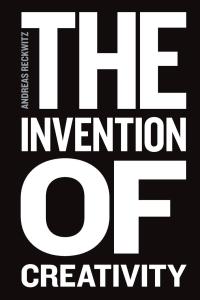
It is an ambitious essay that analyses how creativity has shifted from being an exceptional quality—associated with artistic genius—to becoming an omnipresent social mandate. Throughout the book, it sharply describes the transition toward a culture in which what is “creative” is no longer an added value but a constant requirement in work, education, consumption, and even everyday life.
The author shows how this change is part of a broader process of the aestheticization of society, where what is original, expressive, and different acquires an almost absolute value. Creativity ceases to be a gift and becomes an obligation: one must be creative in order to stand out, to work, and even to construct one’s own identity. At this point, the analysis is particularly insightful, as it reveals a real tension of our time: what is presented as freedom ultimately turns into pressure.
The book has intellectual solidity and a well-developed conceptual framework, but it is not an easy read. Its style is dense, typical of contemporary German sociology, and at times it can feel repetitive or overly abstract. Moreover, although it accurately describes the phenomenon, it is less clear when it comes to offering a firm normative judgment; it remains more in diagnosis than in guidance.
Even so, it is worth reading because it helps us understand one of the deepest cultural transformations of late modernity: the replacement of truth and goodness with what is interesting, novel, or expressive. And seen critically, this allows the reader to gain distance and not be swept away by a demand that, under the appearance of freedom, can empty life of meaning.