
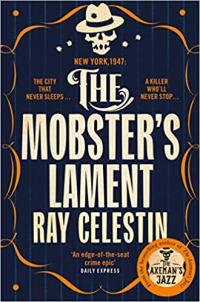
Ray Celestin lives in London. He studied languages and Asian art history. He writes screenplays for film and television and has published short stories. This is the third novel in the City Blues Quartet series.
The story is set in New York in 1947. Gabriel, manager of the famous Copacabana Club, plans to fake his own death to escape the clutches of the mafia. But ten days before the planned date, Costelo—head of one of the local mafia families—gives him an almost impossible task: to track down two million dollars. If he fails, there will be a price on his head for the rest of his life. Private detective Ida arrives in New York around that time to help her former colleague Michel Talbot. Michel’s son has been accused of a brutal quadruple homicide. Ida and Michel know he must be innocent, but there is something he is hiding from them.
The author weaves into the fiction moments from the final years of the famous musician Louis Armstrong’s career.
The plot features brilliant descriptions of New York’s dangerous and intense atmosphere, where fun, intrigue, and violence intertwine. The author masters the noir genre and demonstrates a talent for incorporating psychological, cultural, and social elements—such as discrimination against African Americans—which enrich this well-researched novel. There is a positive portrayal of family bonds.
The reader should have a basic level of moral education. There are no explicit descriptions.