
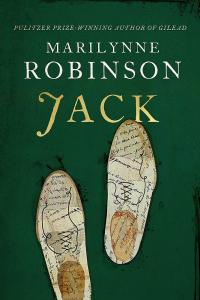
Jack is Robinson's fifth novel and the fourth in the Gilead sequence, preceded by Gilead (2004), Home (2008), and Lila (2014). Gilead won a Pulitzer Prize and is a very deep, touching novel, with, astonishingly, a lot of supernatural content. The Gilead novels each focus on one character in the lives of two preachers, one Presbyterian and one Baptist, in a small rural town in Iowa in the 1950s. The prose and narrative are languid and very literary. There are numerous references to famous English poems. They are wonderful novels, but not easy for people without literary and theological formation.
The author, Marilynne Robinson, is sometimes described as a Calvinist theologian. Of all the novels, Jack is most clearly stamped with a Calvinist outlook. The story takes place in the state of Missouri, in the 1950s, where segregation and miscengenation laws are still in force. The hero, or, rather, protagonist, is Jack Broughton, a talented and charming white man in his 30s, the son of a Baptist preacher. He has an almost connatural impulse to make trouble and collapse morally. He is an unkempt alcoholic; he cannot keep a job; he depends on subsidies from his doctor brother; he lives in a dingy boarding house; he has spent two years in jail for theft; he is a liar.
But then he meets (in, bizarrely, a cemetery), Della, a beautiful "coloured gal". She, too, is the child of a Baptist preacher; she is an English teacher; she is very respectable, professionally, socially and morally. But she falls head over heels in love with him. The action -- such as it is -- in the novel describes how their relationship develops in segregated South where white despise him for having an African-American lover and the African-Americans hate him for corrupting Della.
The novel ends with the doomed couple taking a bus into their new life together -- but we know from the other novels that they eventually break up. Perhaps it is best seen as a chronicle of God's mercy upon people who are hopelessly predestined to weakness.