
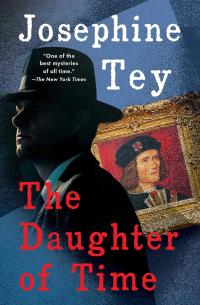
Inspector Grant's Case No. 4 revolves around this renowned Scotland Yard detective, who, after suffering a leg fracture, finds himself in the hospital and overwhelmed with boredom. Someone suggests he reflect on an intriguing question: is it possible to deduce a person's character solely from their appearance? Driven by this idea, Grant embarks on an unconventional investigation, using a portrait of Richard III as his starting point. As he delves deeper, he questions whether England’s most infamous monarch might, in fact, have been innocent. He approaches his study of the king and his reign as if it were a genuine police case.
The novel blends elements of mystery with meticulous historical research. It is packed with fascinating details, which makes it a slower-paced read. The predominant style is narrative, with minimal dialogue, and it is imbued with characteristic English irony. The author’s skill in psychological analysis stands out, turning the work into a genuine inquiry into a historical figure from the 15th century. Moreover, it invites readers to reflect on how history is constructed and how it shifts depending on who tells the story.
This book is perfect for fans of history and the English monarchy. In 1990, the Crime Writers’ Association of Great Britain recognized it as the best mystery novel written in English.