
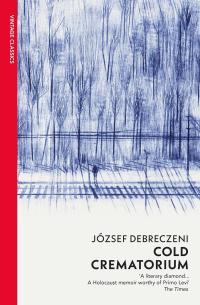
Debreczeni (1905–1978) was a prominent Hungarian writer and journalist who spent most of his life in Yugoslavia. The book, halfway between memoir and chronicle, begins with his arrival at Auschwitz in 1944, when he was 39 years old. “From then on, everything became a kind of intermittent and oppressive dream... we saw beings dressed in carnival costumes... they moved as if dragging themselves along, with the measured gestures of a slow-motion film... spectres and scarecrows.” Thus begins a journey through various camps, culminating in the “cold crematorium”, the so-called hospital camp at Dörnhau, where prisoners who were too weak awaited execution. Miraculously, he survived so many hardships until he was liberated by Soviet soldiers, as he recounts in the final pages.
This account, described as “the harshest and most ruthless ever made against Nazism”, is considered a lost gem of Hungarian Holocaust literature that remained unpublished for decades. Reading it conveys the harshness of this relentless degradation, tears away the veil and reveals the barbarity without restraint.