
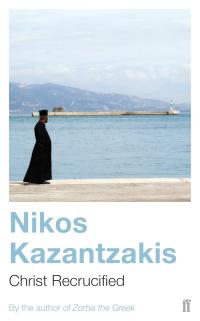
In a Greek village under Ottoman rule, between the two World Wars of the last century, everyone is preparing to live Holy Week in the role of a character assigned to them (Christ, Judas, Mary Magdalene, etc.). Refugees arrive whose village has been burned by the Turks. Concerned with peace, abundance, and material security, the villagers drive these refugees away, forcing them to flee into the mountains. The villagers, at war with these refugees, gradually identify with their roles until the final tragedy at Christmas of that year.
A very great novel of undeniable literary, social, religious, political, philosophical, and moral quality. This fresco of a Greek tragedy is timeless, dealing with the eternal gospel, human passions, and the wanderings of humanity throughout history. Irony rubs shoulders with drama, prayer with blasphemy, remorse with cynicism. In fact, the author depicts the drama of each life with its struggles, pettiness, greatness, and baseness. Beyond individual consciousness, it addresses the community, culture, and their destiny.
However, this book requires an inner balance, which leads to recommending it with caution to young adults or insufficiently educated readers. Indeed, it can provoke despair or resignation in the face of the malice of the human heart. Without containing shocking, violent, or erotic scenes, there is a heavy atmosphere that may overwhelm the reader with the natural perversity and animality of humans. It is clear that personal balance and human virtues are unknown to these Greek villagers!