
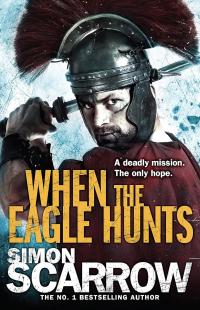
Third book in the series starring the Roman soldiers Cato and Macro.
“After the bloody conquest of Camulodumo, during the harsh winter of 44 A.D. the Roman army prepares to extend the invasion of Britannia with a contingent of 20,000 legionaries armed to the teeth. General Aulus Plautius hopes that the arrival of spring will facilitate the campaign, but unexpectedly his family is kidnapped by the druids of the Dark Moon. It takes two volunteers bold enough to venture into the dangerous territory of the Durotriges tribe, find the general's family and, if possible, rescue them before they are slaughtered. To their misfortune, the centurion Macro and the optio Cato will be the chosen ones.”
There are sexual descriptions of some entity, brief but unnecessary.
Abundant graphic violence, with nasty details, and supremely lurid, for the bad guys in this books are a group of “Druids of the Dark Moon cult.” They are savage and ruthless. This book should not be read by children or people extremely sensitive to blood. There are massacres of entire villages. And really grisly tortures, with very vivid descriptions.
Fast paced and action packed. Very easy to read.