
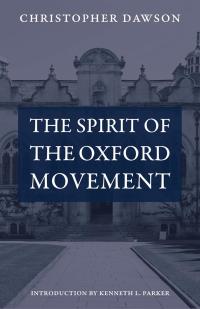
In The Spirit of the Oxford Movement, Christopher Dawson offers a clear and engaging look at the rise of the Oxford Movement, a religious phenomenon that sought to revitalize the Church of England during a time of profound political and cultural tensions. The book moves beyond a purely historical account to focus on the spirit and motivations of those who shaped the movement, showing how faith, tradition, and culture are deeply intertwined.
Dawson begins by setting the historical context: the Church of England had lost part of its authority to the State after the Glorious Revolution of 1688 and the rise of Enlightenment-inspired liberalism and rationalism. This created a crisis of identity for the Church, which had to redefine its spiritual and social role in a rapidly modernizing England. In response, the Oxford Movement emerged to reaffirm the Church’s authority and autonomy, reconnect with apostolic tradition, and recover elements of Catholic spirituality within the Anglican framework.
The author devotes chapters to the movement’s leaders, exploring their personalities, relationships, and contributions. John Keble, with his devotion to tradition and personal humility, represents the spiritual soul; Hurrell Froude brings energy and boldness; and John Henry Newman emerges as the intellectual heart, capable of systematizing the movement’s ideas and giving them lasting influence. The interplay between these leaders explains both the initial strength of the Oxford Movement and the internal tensions that shaped its evolution.
Dawson also highlights the cultural and educational dimension of the movement, including the influence of early Church history, admiration for the Middle Ages, and engagement with the writings of the Church Fathers. This approach shows that the Oxford Movement was not merely a political or moral reaction, but a profound effort to reconnect spiritual life with the historical and doctrinal richness of the Church.
Finally, Dawson analyzes the impact and evolution of the movement after Newman’s departure. While his absence left an intellectual void, the legacy of Tractarianism and Anglo-Catholicism endured thanks to figures such as Edward Pusey and Samuel Wilberforce, who preserved the “Middle Way”: a balance between tradition and reform that defined the Oxford Movement.