
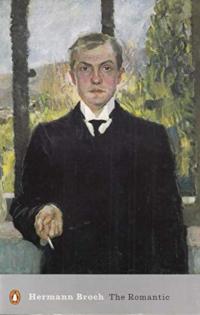
It is the first part of the trilogy The Sleepwalkers, a work that analyzes the crisis of European consciousness at the beginning of the 20th century.
At its core, Pasenow’s drama, like that of many other characters of that period (and consequently also of their creators), lies in the failure to distinguish between the essential and the accidental within the famous “decline of values.” Joachim von Pasenow is struck by scruples when it comes to marrying Elisabeth and consummating the marriage, as he has betrayed the conventions of his world by falling in love with the “cocotte” Ruzena. All or nothing: either becoming Ruzena’s lover and discarding his uniform, or remaining faithful to the uniform and therefore to marriage with a woman of his own class.
If we listen to Eduard von Bertrand, the businessman, the traitor to the uniform and to values, he seems to us like a man of our own time, in which a practical mindset prevails over oppressive social conventions. For Pasenow, tearing down these conventions also means throwing overboard marriage and honor... (Helmuth’s death in a duel is highly symbolic). However, Broch seems to offer a ray of hope, thanks to the charming Elisabeth and the Christian background of Joachim himself, who ultimately comes to his aid. Miguel Mihura addressed the same subject in a humorous key (Three Top Hats), but without the final ray of hope. Broch’s prose is exquisite, and the final challenge posed by the novelist to himself and to his readers is delightful.