
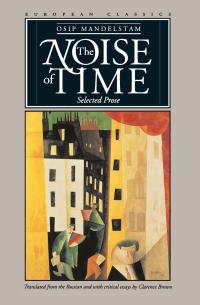
It is a short book in length but enormous in intellectual and moral density. It is not a conventional autobiography nor an exercise in nostalgia: it is the testimony of how a conscience is formed —and defended— in the midst of an era beginning to betray culture, language, and truth.
Mandelstam does not recount his life out of vanity or introspection, but to show how the individual is shaped, sometimes brutally, by the historical climate, the language he inherits, and the ideas that seek to subjugate him. The “noise” to which the title alludes is that constant pressure of the collective, the ideological, the political, invading the interior life; an experience the author perceives with almost unbearable lucidity.
The fragmentary, associative structure, far from being a modern whim, responds to a profound fidelity to memory and real experience: school scenes, readings, cities, music, and minimal gestures are charged with meaning because in them the continuity —or rupture— with tradition is at stake.
The prose is demanding, concentrated, austere, and beautiful, without any intent to please; it requires an attentive and disciplined reader, but in return, it shapes them. It is neither an easy nor indulgent book, and precisely for that reason it is so valuable today.
It may be arid for those seeking immediate narrative or emotion, and not all fragments have the same intensity, but the whole possesses extraordinary ethical and aesthetic coherence. Here, literature is not ornament: it is responsibility. Mandelstam asserts, without proclamations, that the right word carries moral weight and that when culture deteriorates, what prevails is noise and barbarism.