
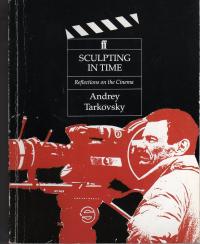
Sculpting in Time: Reflections on the Cinema (1986) is a book written by Russian filmmaker Andrei Tarkovsky, in which he reflects on the art of cinema and his philosophy. Through this essay, Tarkovsky explores his personal view of cinema as a unique medium of artistic expression, capable of capturing the essence of time and human experience more deeply than any other art form.
The title of the book refers to Tarkovsky's central idea: cinema as a way of sculpting time. For him, time is not just a linear measure, but an element that can be shaped and expressed through the cinematic image. Throughout the book, Tarkovsky discusses how cinema should reflect life in an organic way and not just narrate events. He argues that cinema should be a means of delving into human consciousness, exploring spirituality, memory, and the passage of time.
The book also includes reflections on the creative process and the relationship between the director and the audience. Tarkovsky advocates for cinema that is slow and contemplative, rejecting the speed and superficiality of commercial media. He criticizes the tendency of studios and the film industry towards mass production and immediate satisfaction, proposing instead a cinema that seeks to transcend the material and connect with the essence of the human being.
Sculpting in Time is a deep analysis of cinema as an art form, not only in technical terms but also in philosophical and spiritual ones. Through his words, Tarkovsky invites filmmakers and viewers to consider cinema not only as entertainment but as a means of emotional and transcendental exploration.