
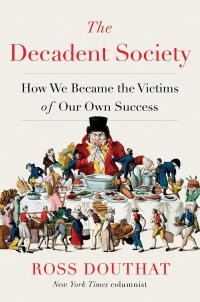
Douthat puts forward a provocative thesis: the wealthiest and most technologically advanced Western societies have entered a period of decline precisely because they have been too successful and have lost their capacity for renewal. The problem is not so much the collapse of civilization as its stagnation: we remain prosperous, but we have stopped truly moving forward.
The author identifies several symptoms of this decline: economic stagnation, political paralysis, cultural exhaustion, and demographic decline. He adds to these a culture increasingly dominated by repetition: sequels, remakes, nostalgia, escapist entertainment, and a certain inability to imagine a radically different future.
He speaks of “sustainable decadence”: a society that can remain for a long time in a state of comfort, wealth, and security, but also of sterility, lack of ambition, and loss of vitality.
The book is particularly interesting because it indirectly champions issues that today tend to be relegated to the background: birth rates, cultural transmission, civilizational ambition, the family, and a society’s ability to have a future worth building. His diagnosis of the exhaustion of the West raises many anthropological and moral questions.
It is an intelligent and rather pessimistic essay, though not entirely without hope: Douthat considers the possibility of a renewal that could break this long period of stagnation.