
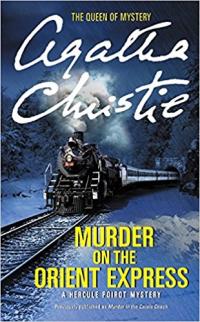
Murder on the Orient Express is one of Agatha Christie’s most iconic novels, starring the famous Belgian detective Hercule Poirot. He is traveling from Istanbul to Paris aboard the Orient Express. He senses a certain tension among the passengers, and one of them—a wealthy, eccentric American businessman—even seeks his services as a detective. After an unusual night, during which he wakes up several times due to various noises, Poirot discovers that the man who had tried to hire him has been murdered. The train is stopped due to a snowstorm, and everyone aboard the Orient Express is a suspect. But they all seem to be innocent. The premise, as clever as it is intriguing, places the reader in a classic "locked-room mystery" with an international cast of suspects.
Christie masterfully displays her narrative skill by sketching the profiles of each passenger, all of whom have murky pasts and hidden motives. Poirot, with his unwavering logic and sharp insight into human psychology, interrogates the travelers one by one. The author plays with the reader’s expectations, offering clues that appear contradictory and leading to an ending as surprising as it is bold.
One of the novel’s greatest achievements is its closed, claustrophobic atmosphere, which heightens the narrative tension. The isolation of the train trapped in snow serves as a perfect setting to explore guilt, justice, and the desire for revenge. Christie goes beyond simple detective entertainment and raises moral questions about punishment and justice when the legal system fails.
Murder on the Orient Express is not only a masterpiece of mystery fiction, but also a meditation on the fragility of social order and moral ambiguity. Reading it is like entering a labyrinth of human motives, resolved with the precision of a Swiss watch and the unmistakable charm of Detective Poirot.