
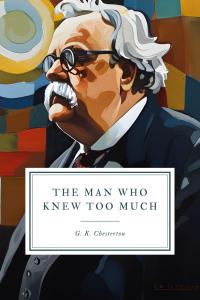
Book that contains eight tales with two people who are in all cases: an English aristocrat, Horne Fisher, who knows almost all the people who are the protagonists of public life and a young journalist. In the first decades of the twentieth century, a person of Horne's age and condition could do it; sometimes they were relatives and sometimes because the social circles in which they moved were few and common. That leads to the fact that it could be said of him that he knew too much. He acts in cases involving murders, which are not always solved by the police. The aristocrat is accompanied by a young reporter, Harold March.
Chesterton outlines the essential characters of the cases with the precision of a good painter. His knowledge of the environment and of human nature allows him to perceive what others do not see. The social criticism of this environment, in which appearance matters more than reality. It is a clear warning of the growing risk of corruption spreading due to the lack of virtue. The book is entertaining. It is full of paradoxes.