
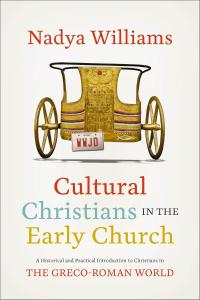
It is a historical-religious essay that seeks to dismantle an overly idealized image of the early Church. Nadya Williams argues that, from the earliest centuries, many Christians lived a faith mixed with customs, ambitions, and cultural assumptions drawn from the Greco-Roman world. Drawing on biblical episodes, patristic testimonies, and concrete historical cases, she shows how early believers also struggled with vanity, money, sexuality, political power, and social prestige.
The book’s main strength lies in bringing ancient history closer to the general reader with a clear, agile style full of concrete examples. The author is able to illuminate the social context of early Christians and help readers better understand certain passages of the New Testament and the Church Fathers. Moreover, her reminder is valuable: holiness has never been automatic or merely sociological—even in apostolic times, Christian life required real conversion and spiritual struggle.
However, the book has some limitations. In certain chapters, contemporary applications become too dependent on current American cultural debates, and there the historical analysis loses strength. Some social and political interpretations show a sensitivity closer to contemporary evangelical Protestant Christianity than to a fully Catholic vision of tradition. Nevertheless, the work remains interesting and can serve as a thought-provoking reading for reflecting on the ongoing tension between faith and cultural environment.