
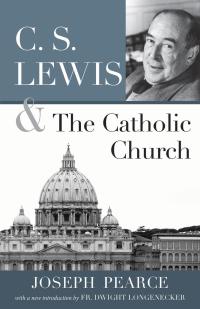
Joseph Pearce, a renowned scholar of English literature, addresses in this essay the reason why C. S. Lewis, despite his intellectual and spiritual closeness to Catholicism, never took the definitive step toward the Catholic Church. Pearce develops a calm and well-founded analysis, combining historical rigor with a subtle psychological and religious understanding of the author of Mere Christianity. The book thus stands at the crossroads of literary criticism, intellectual history, and theological reflection.
Pearce’s central thesis is that the main obstacle to C. S. Lewis’s conversion was not doctrinal, but cultural and biographical. Lewis was a Northern Irish Protestant who had been educated in an environment marked by deep anti-Catholic prejudice, where Catholicism was perceived not only as a theological error but as a historical and almost identity-based enemy. This early formation left a lasting mark on his character and religious imagination. The book is especially valuable for those who wish to better understand that second generation of Anglican intellectuals—converts or figures very close to Catholic doctrine—who, like Lewis, Tolkien, or Chesterton, engaged in intense dialogue with Rome from different positions.
Joseph Pearce is a British intellectual and writer. Born in London in 1961, he experienced a youth marked by ideological radicalism and estrangement from faith, an experience that culminated in a period of imprisonment during which he began a profound process of conversion to Catholicism. Since then, his life has been devoted to study, teaching, and cultural outreach from a Catholic perspective, especially in the field of English literature. His own biography, shaped by conversion and the search for truth, helps explain the empathy and respect with which he approaches figures such as C. S. Lewis, whom he seeks to understand.