
1929: The Inside Story of The Greatest Crash in Wall Street History
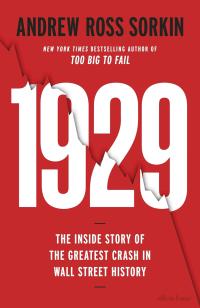
The narrative covers the events leading up to the 1929 stock market crash and its consequences. The book explores several important themes, including the role of the Federal Reserve’s lending policies and the lives of several key figures, many of whom led extraordinarily luxurious and extravagant lifestyles.
The book devotes considerable attention to these figures, their personal lives and their way of life. As the narrative unfolds, it begins with elegant mansions near Central Park, armies of servants attending to their every need, and kitchens equipped with stock market tickers. However, as the crash develops, debts, worries, lawsuits over misconduct and public disgrace gradually come to dominate the scene.
Nevertheless, the epilogue offers a kind of moral conclusion to these personal stories. Most of the figures end up financially ruined, but they carry on with their lives; some even go so far as to cook their own meals. In a way, this serves as a reminder of what we really need in order to live.
As a book portraying the real lives of historical figures, it occasionally contains strong language and frequently depicts morally questionable behaviour, but in general it does not dwell on such matters in an obscene or graphically explicit way. These behaviours often have an implicit moral dimension or, at the very least, their consequences are shown through legal proceedings and the public condemnation that many of the protagonists had to face. Perhaps the most disturbing aspect of the book is its accounts of people who died by suicide.
The book is an international bestseller and also received favourable reviews, appearing on several lists of the best books of 2025.